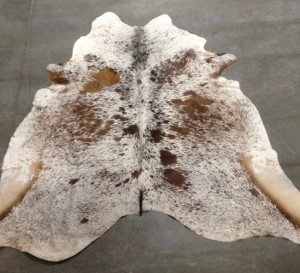
How to buy a Cowhide Rug
Cowhide Buyers Guide
When many people shop for their Cowhide Rug they look at the pretty colors and make their decisions from there and leave it at that. There are a few things that need to be considered before handing over your credit card. So we are going to try to answer some of the most common questions we are asked about buying a Cowhide Rug
Size Matters: You should measure the area that your Cowhide is going to be placed to get a general idea of the size your going to need. Sizes can vary greatly and if your trying to pull of a certain look you certainly want the right size.
Color Scheme: With a wide variety of colors out there its a good idea to come up with an idea of colors that will work with your room. Things to consider ie.. Wall colors, Furniture colors, Floor colors.
Where is it from: The Truth About Origin: You always want to know exactly where your rug was tanned. Hides from Brazil are globally recognized as the gold standard. While you’ll find plenty of hides in Texas or Oklahoma, many are sourced from Mexico, Argentina, or Colombia. In those regions, the tanning processes are often less rigorous, leading to a "greasier" feel or a shorter lifespan. Every top-quality hide we carry is 100% Brazilian-sourced for one reason: durability.
The Secret is in the Tanning
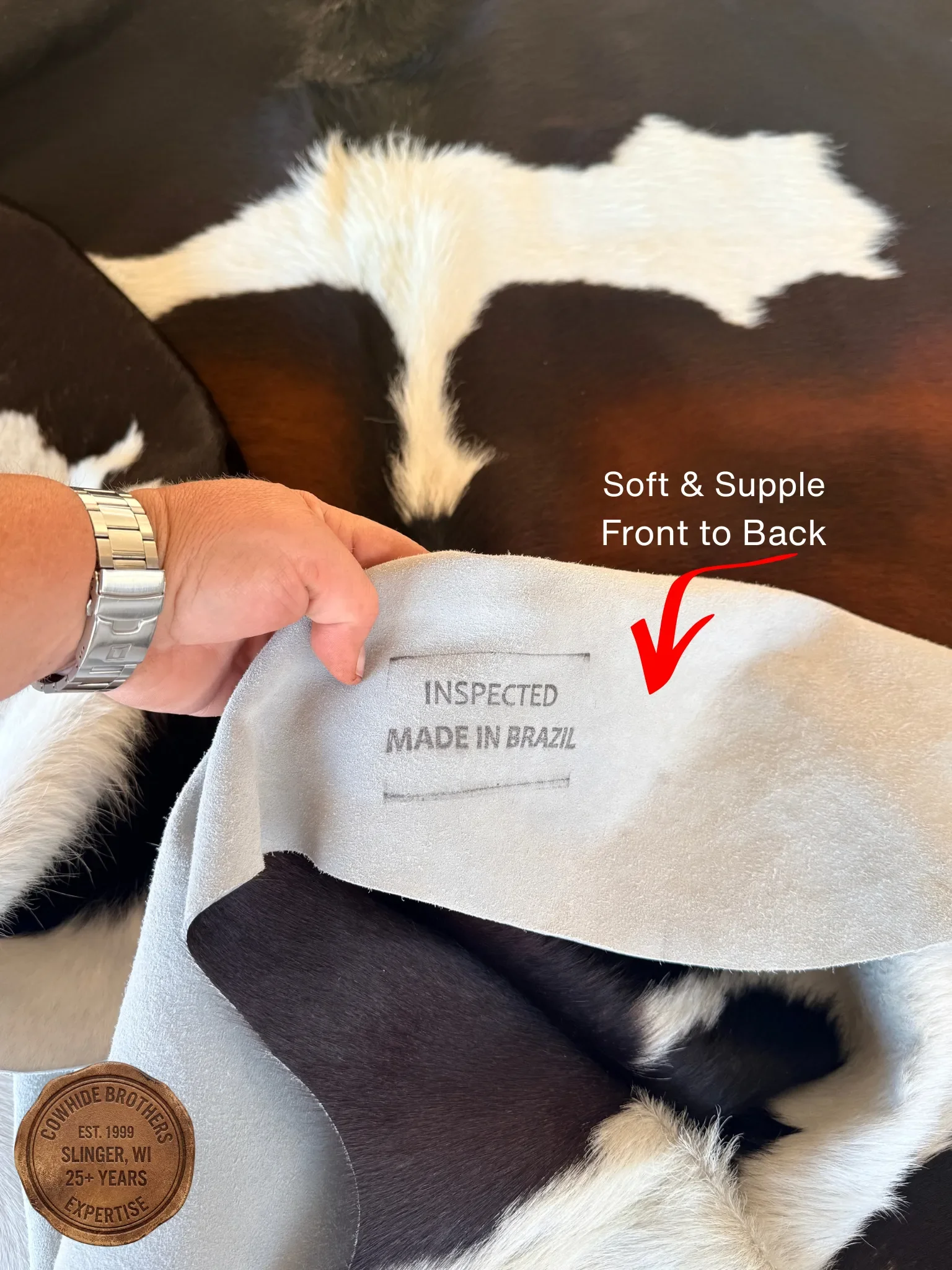
The stamp says quality. Rushed tanning processes result in a stiff, cardboard-like feel. Premium hides should always feel like thick suede.
Is the Back Soft:One of the clearest signs of a premium rug is the back side. On a high-quality hide, the underside is soft, supple, and moves with the rug. On a cheaper or poorly processed hide, the back feels stiff almost like sandpaper. If the back is rigid, it won't lay flat and will eventually become brittle. These cowhides are one solid piece of leather, the back is part of the leather.
How Thick is the Hide: This is something that an experienced eye can detect. When looking at the edge of the hide try to determine how thick it is. Your looking for somewhere between 1/8 inch to a 1/4 inch thick. The cheeper hides will feel real flimsy and be fairly thin. A thin Cowhide rug can cause problems by curling up (not normal) when on the floor and cause a tripping hazard.
Evaluating Structural Repairs & Stitching
Natural cowhides often feature small, professional reinforcements. Because these are organic products, "scars" or small holes (from life on the range or the tanning process) are common. A stitch is not a defect—it is a sign of expert restoration.
The Professional Standard: The "Wedge" Repair
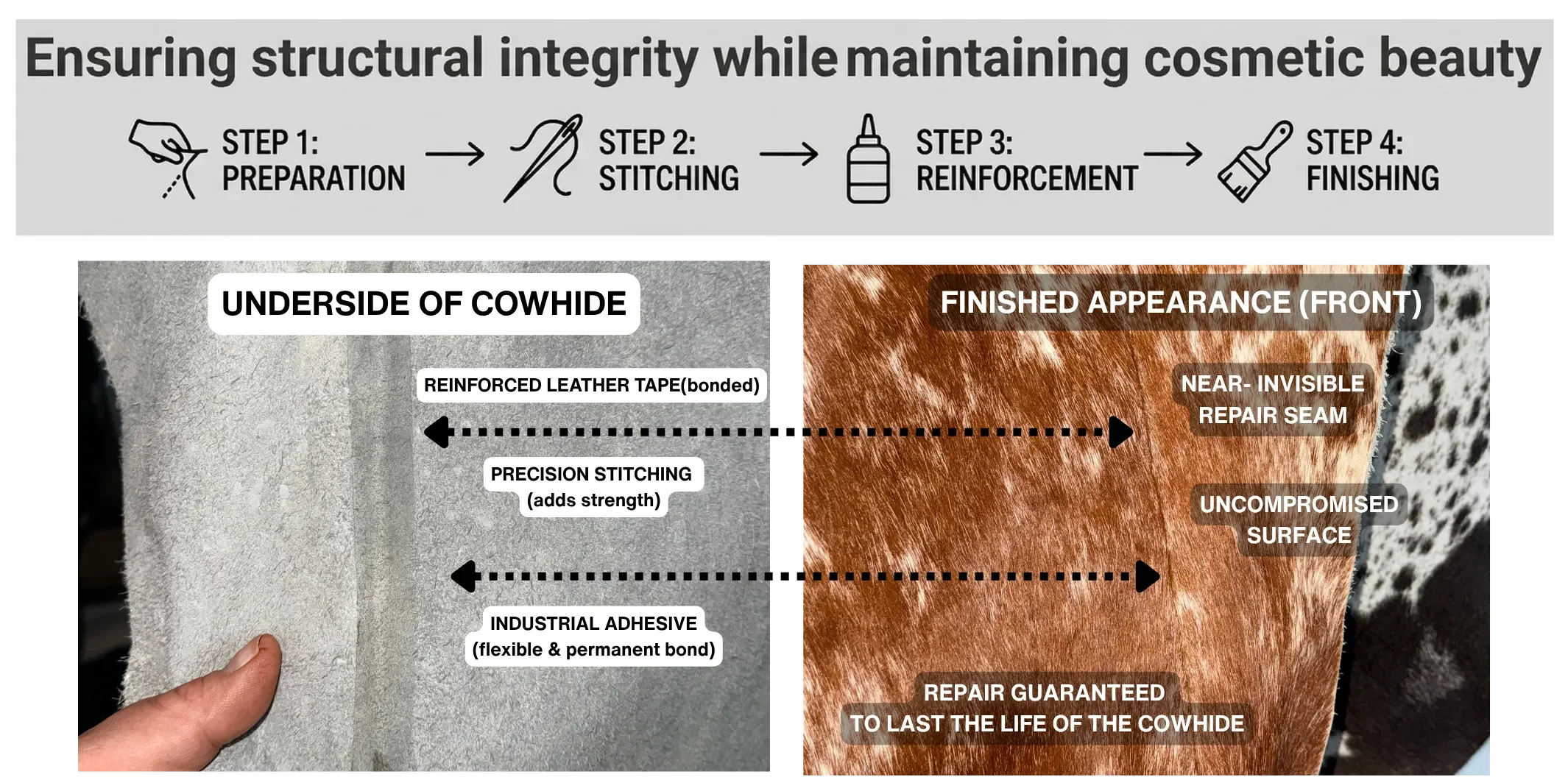
When inspecting a hide, flip it over. A high-quality repair uses a matching leather wedge—a small piece of hide precisely fitted and bonded to fill the void.
What to look for on a quality repair:
Structural Bond: The wedge should feel like a single, continuous piece of leather, not a loose patch.
Zero Visibility: From the front (the hair side), the repair should be virtually undetectable, following the natural "flow" of the hair.
Flexibility: The repair should move and fold naturally with the rest of the hide, indicating the use of flexible industrial adhesives.
Red Flags: When to Walk Away
If a repair doesn't meet these criteria, it may fail within months of use:
Surface Gaps: If you can see the hole or the repair material from the front.
Brittle Adhesives: If the repair feels "crunchy" or stiff, it will likely crack over time.
Direct Stitching: Holes that are simply "sewn shut" without a wedge often create a pucker in the hide, ruining the flat lay of the rug.
Buyer’s Tip: A professionally repaired hole is often stronger than the surrounding hide and is guaranteed to last for the life of the rug. If it looks like a "patch job," it likely is.
THE ANATOMY OF A PROFESSIONAL REPAIR
A correctly reinforced repair should be structurally permanent and virtually invisible to the eye.
How to evaluate a Cowhide?: Good vs Bad
| Feature | Premium Hide (The Gold Standard) | Low-Quality Hide (The Red Flag) |
|---|---|---|
| Texture | Smooth, soft suede: Feels like a high-end jacket. | Rough & Bristly: Feels like sandpaper or raw cardboard. |
| Durability | High: Fibers are tightly bound and won't pull apart. | Low: Prone to tearing, thinning, or "pulling" fibers. |
| Tanning | Professional Chrome-Tanned: Supple and stable. | Under-processed: Often "fleshy" or oily on the back. |
| Thickness | 4–6 oz: Substantial weight that "hugs" the floor. | 1–3 oz: Paper-thin; slides easily and feels flimsy. |
| Underside Texture | Suede-Soft: Tight grain with zero loose fibers. | "Shaggy": Rough, fibrous, and sheds all over your floor. |
| The "Bunch Test" | Elastic: Springs back flat immediately when released. | Brittle: Retains creases or feels stiff like cardstock. |
| Edges | Flat & Heavy: Naturally weighted to prevent tripping. | "Cigaring": Edges curl up and stay up within weeks. |
| Longevity | Decades: Built to be a generational piece. | 1–2 Years: Usually discarded due to curling or balding. |